Disposable Email for OTP: Ephemeral Email for Secure, Private Verification
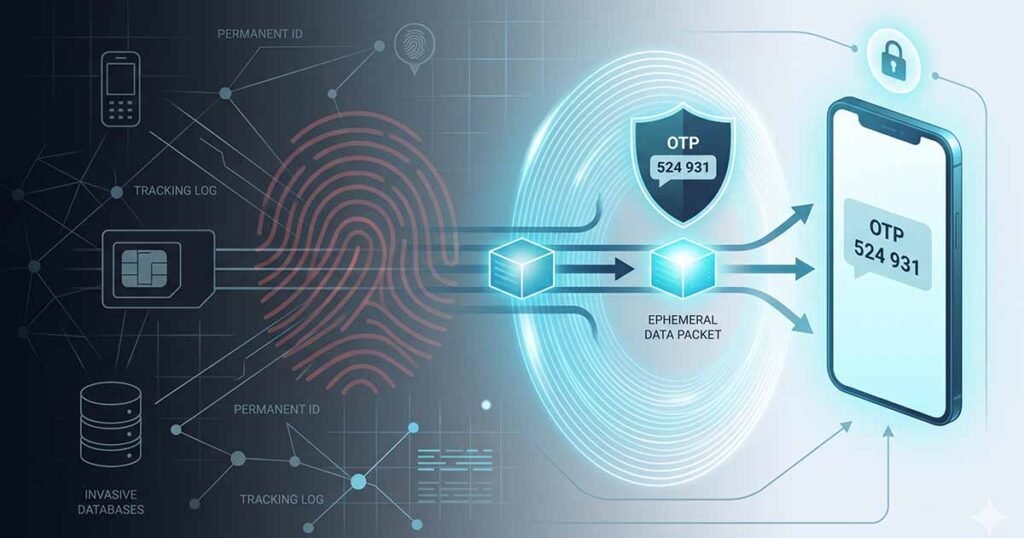
Every time you type your email address into a website to receive an authentication code, you aren’t just logging in—you are signing a digital warrant that links your physical identity to an invasive database.
Using a disposable email for otp generation is the only way to break this cycle. In today’s data economy, your primary email address has evolved into a persistent identity anchor. It acts as a cross-platform identifier, a data broker’s indexing key, and a silent tracker linking your online behavior, real-world location, and personal accounts across the web.
This shift has transformed permanent mobile numbers and standard email inboxes into high-risk liabilities. One-time passwords (OTPs) should be treated exactly as they are named: temporary, disposable, and context-specific data packets. Instead, they are typically tied to a permanent identifier that follows you everywhere.
The solution? Decouple identity from verification. By utilizing a browser-native, session-isolated virtual reception architecture, you can use a disposable email for otp delivery to isolate identity from authentication. This ensures sensitive account access remains anonymous while neutralizing the threat of persistent digital tracking.
1. The Personal Email Trap: A Single Point of Failure
Permanent email equals persistent identity. Unlike anonymous app logins or rotating credentials, we rarely change our primary email address. It is the centralized node we use for work, banking, social communication, and platform registrations. That very stability makes it extremely valuable to third-party aggregators—and dangerous for your personal data sovereignty.
The Universal Linkage
Your email serves as the primary unique identifier across hundreds of independent ecosystems. When a data breach or API leak occurs at an obscure e-commerce store, bad actors don’t just get a password hash; they get a universal join key. This key allows data syndicates to effortlessly map your cross-platform behavior, stitching together credit histories, online purchases, and professional credentials into a centralized shadow profile.
Data Broker Exploitation
Behind the scenes, marketing firms and automated tracking scripts routinely harvest registration and OTP verification logs. Some advanced surveillance platforms even scrape common temporary email domain pools to flag and update identity graphs. Over time, every single form submission using your real email feeds an invisible dossier, built entirely without your explicit consent.
From Spam to Security Compromise
While phone-based OTP verification remains highly vulnerable to network-level exploits like SIM-swapping, email-based authentication is far from bulletproof. A compromised primary inbox acts as a master key capable of resetting financial credentials and cloud backups. Furthermore, automated marketing mailers (spam) generated from simple sign-up boxes routinely inject tracking pixels or malicious payloads into your daily workflows.
[Target Service Form]
       │
       ▼ (Submits OTP Request)
[TempEmailNow Virtual Routing] ──► (Instant Delivery to Browser UI)
       │
       ▼ (Close Tab / Session Expiry)
[Complete Server-Side Shredding] ──► ZERO Persistent Footprint
A session-isolated architecture solves this vulnerability at the source. Each temporary inbox is strictly scoped to your active browser session (or a controlled 10-minute window). When you close the tab or expire the session, the inbox and all associated message payloads are completely shredded from server-side memory. Once the verification code is used, it ceases to exist—preventing data brokers from ever repurposing it or tracing it back to your permanent identity.
2. Deploying a Disposable Email for OTP Security
Traditional email providers—and even custom Gmail aliases—fundamentally rely on persistent database records tied to your metadata. Advanced privacy platforms replace this paradigm with a strict virtual reception architecture designed to treat messages as transient, isolated packets of information rather than stream-connected data links.
- Session-Scoped Isolation: The moment you visit the platform, the backend provisions a unique, ephemeral address (e.g.,
session123@tempemailnow.com) generated natively in your browser. This endpoint lacks any connection to your real name, IP, or location history. - Real-Time Edge Delivery: Incoming mail delivery streams bypass persistent database queues entirely. Incoming OTPs and validation links are routed directly into the active browser UI via real-time web sockets. There is zero polling delay, and no manual page refreshing is required.
- Zero-Retention Purge: The exact moment your session terminates—whether via closing the browser tab or hitting an expiration limit—the address is permanently decommissioned. Messages are instantly wiped from memory, leaving no historical logs, no hidden cached tables, and absolutely no data for attackers to exploit or compromise.
- Authentication-Free Access: True privacy requires a frictionless onboarding experience. Because there are no sign-up forms, passwords, or secondary backup accounts required to utilize a disposable email for otp tasks, there is zero opportunity for identity accumulation.
3. Four Verification Strategies Side-by-Side
Navigating the modern web requires matching the security demands of an account with the privacy profile of your verification method. Below is a structural mapping of the four primary verification paths available in the privacy landscape.
Strategy A: Ephemeral Public Email (Zero-Friction Routing)
- The Concept: Utilizing free, browser-native temporary email generation for immediate, one-off communication isolation.
- The Deployment Flow: Visit TempEmailNow.com, copy your instantly generated address, and paste it into the target platform’s registration field. Watch your verification string or link populate in real time within the dashboard. Once verified, close the tab to trigger an immediate server purge.
- Best For: Accessing download links, whitepapers, low-stakes forum registrations, newsletter sign-ups, and sandbox software testing.
- Advantages: Absolute anonymity, zero configuration, zero signup walls, and immediate isolation from marketing spam.
- Trade-Offs: The inbox belongs strictly to the active session; it cannot be recovered for future password resets or long-term account recovery.
Strategy B: Private Virtual Email Aliases (Segmented Temporary Accounts)
- The Concept: Maintaining persistent, long-lived email forwarding aliases that mask your true backend destination. Advanced users can use localized configurations to structure distinct local-parts before routing them through an abstracted custom domain layout.
- Best For: Ongoing trials, developer notifications, or subscription tiers where you require semi-regular correspondence without surrendering a personal inbox.
- Advantages: Offers ongoing incoming mail access and recovery options while keeping your underlying personal email address completely hidden from merchants.
- Trade-Offs: Reusing the same alias across multiple platforms introduces correlation risks, allowing data brokers to link disparate services if the tracking endpoints match over time.
Strategy C: Virtual Phone Numbers (VoIP Systems)
- The Concept: Deploying virtual telecommunication endpoints to capture legacy SMS verification codes without linking physical SIM hardware to your identity profile.
- Best For: Platforms that strictly refuse email-based authentication and mandate a phone number for profile generation.
- Advantages: Shields your physical SIM tracking profile; allows geographical location-masking across international registration bounds.
- Trade-Offs: Virtual numbers are frequently blacklisted by strict financial or banking verification systems. Additionally, registering for premium VoIP services often requires an alternative payment or verification method unless funded completely anonymously via privacy cards or cryptocurrency.
Strategy D: Local Authenticator Apps & Hardware Keys (TOTP Protocols)
- The Concept: Completely bypassing intermediate transit networks (SMS/Email) by adopting localized Time-Based One-Time Password algorithms or physical cryptographic hardware tokens.
- Best For: Mission-critical infrastructure, primary email accounts, corporate directories, and high-value financial or cryptocurrency platforms.
- Advantages: Completely immune to telecom tracking, phishing-resistant, and entirely under local cryptographic control on your personal device.
- Trade-Offs: Requires explicit initial enrollment steps and explicit service provider support. Losing the underlying physical device or a secure backup of the master seed can lead to permanent account lockout.
4. Verification Methods Matrix
| Method | Anonymity Level | Persistence / Lifespan | Primary Use Case | Core Advantage | Core Disadvantage |
| Personal Email / Phone | Low (High correlation risk) | Long-Term (Years to lifelong) | High-stakes banking, government services, primary cloud backups. | Universal platform acceptance; predictable recovery routes. | Fully linkable; heavy data broker profiling; severe fallout if breached. |
| Disposable Email | Very High (No registration) | Very Short (Session or 10-min) | OTP bypass, throwaway sign-ups, untrusted downloads. | Eliminates tracking pools; instant setup; automated server-side wiping. | Zero recovery path after expiration; not suitable for critical apps. |
| Virtual Phone Number (VoIP) | Medium (Decoupled from SIM) | Medium (Days to months) | Mandated SMS-only verifications, temporary profiles. | Shields physical location; intercepts tracking logs on an abstraction tier. | Frequently blocked by fraud algorithms; often requires payment linkage. |
| Authenticator App / Hardware Key | Very High (Cryptographic) | Device-Bound (Hardware life) | Core digital infrastructure, administrative endpoints. | Immune to intercept, spoofing, and telecom network leaks. | Zero fallback if physical hardware is lost without secure recovery keys. |
5. Security Protocols: Best Practices for Ephemeral Data
To maximize the efficacy of virtualized verification points and avoid accidental data exposure, implement these foundational architectural protocols:
Context Isolation
Treat every generated address as a single-use silo. Never enter the same temporary address across different service accounts. If an adversarial tracker attempts to cross-reference access metrics, isolating the contexts ensures that an exploit or breach on one platform cannot be correlated with another.
Immediate Data Expiry
Do not leave inactive browser sessions hanging open. While modern privacy tools are engineered around automatic data deletion, making a habit of manually killing the session or closing the tab the exact moment your OTP is entered enforces a flawless operational security posture.
Strict Security Segregation
Always draw a definitive line between temporary access requirements and permanent data infrastructure. Use a disposable email for otp bypasses to completely absorb the friction of corporate marketing funnels, testing portals, and initial validations. For long-term accounts, leverage hardened local TOTP or hardware authentication methods immediately following the initial onboarding phase.
6. How to Choose a Disposable Email for OTP Options Successfully
When selecting an architecture to manage your temporary communication streams, look for systems that do not log inbound payloads. Using a disposable email for otp verification ensures that your real identity is completely isolated from the service provider’s dataset.
True data privacy requires introducing intentional friction against automated data collectors. Virtualizing your verification workflow isn’t paranoid; it is a foundational pillar of modern digital hygiene.
Before you enter your personal inbox details into the next web prompt you encounter, pause and ask yourself a simple question: Does this service need to know who I am—or do they simply need to verify that I am real?
That distinction is exactly where your digital privacy begins.
Ready to decouple your online footprint from tracking databases?
Visit TempEmailNow.com right now, click Get Temporary Email, and ensure your identity stays exactly where it belongs: entirely your own.
💬 Frequently Asked Questions
What makes TempEmailNow different from other disposable email providers?
Most traditional temporary email platforms operate on shared inbox pools or write message data to long-term databases, which can be vulnerable to log scraping. TempEmailNow utilizes a proprietary, session-isolated architecture. Every inbox is generated directly inside your active browser instance, routes data via real-time web sockets, and completely purges all data from server memory the moment the tab is closed. No accounts, no tracking, and zero logs are ever retained.
Can I use a disposable email for otp delivery on any online service?
Yes. The incoming mail routing endpoints are fully optimized to handle instant validation messages and security OTPs. The platform dynamically refreshes and updates its active domain infrastructure to bypass typical corporate blocklists, ensuring real-time code delivery across thousands of mainstream web applications.
Does the platform track or store my IP address or geolocation details?
No. The service is built around a foundational zero-logs framework. Because there are no sign-up fields or profile generation steps, there is no underlying database structure capable of storing personal metadata. For users seeking an absolute anonymity tier, the web application runs flawlessly alongside secure VPN configurations and the Tor browser network.
What happens if I require a password reset in the future?
Because ephemeral inboxes are strictly session-bound for maximum privacy, an address cannot be recovered or recreated once the session expires. For services where long-term access, billing updates, or permanent password recovery routes are vital, use a dedicated private email alias or local app authentication.
Are there configuration limits or hidden costs for generating addresses?
TempEmailNow provides completely free, unlimited disposable email addresses for personal use. There are no registration walls or payment tiers required for standard browser-native operation. For specialized or high-volume enterprise API deployment options, dedicated custom routing endpoints are available via premium infrastructure tiers.